Abbot Suger’s Gothic: Light, Space, and Program at Saint‑Denis
A deep read on how Suger forged Gothic through light: the choir’s transparency, colored glass, and theological meaning at Saint‑Denis.
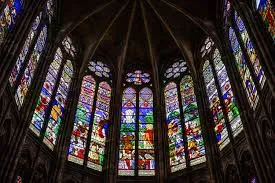
Saint‑Denis is where Gothic begins — not merely stylistically, but spiritually. Abbot Suger articulated a theology of light (lux and lumen) and translated it into architectural clarity: thinner walls, pointed arches, and colored glass that make prayer radiant and legible.
Overview
The choir at Saint‑Denis inaugurates a new language of space. Its transparent envelope, ribbed structure, and chromatic program coordinate devotion, movement, and vision. This post explores the ideas, forms, and materials behind Suger’s revolution.
🔆 Lux, Lumen, and Design Decisions
- Transparent enclosure: The choir unfolds as a glassy envelope, letting color articulate cycles of liturgy.
- Pointed arch + rib vault: Geometry channels thrust efficiently, permitting larger openings.
- Material economy: Mass is relocated to piers; surfaces brighten with glass and gilding.
Light becomes a medium of ascent — from matter to meaning.
📐 Proportions & Rhythm
- Bay modularity: Repeated structural bays choreograph procession and vision.
- Pier-to-bay ratio: Emphasizes vertical clarity and unbroken sightlines.
- Clerestory calibration: Windows are scaled to balance glare and color reading.
$$ ext{Clerestory Ratio} = rac{ ext{window height}}{ ext{wall height}} approx 0.62 $$
| Measure | Approx. Value | Effect |
|---|---|---|
| Bay span | 6–8 m | Processional tempo |
| Vault rise | 1/3–1/2 span | Reduced thrust |
| Pier spacing | Regular | Sightline stability |
🪟 Stained Glass as Text
- Iconographic cycles: Kings, prophets, virtues — didactic color for communal reading.
- Chromatic hierarchy: Deep blues anchor contemplation; reds punctuate narrative action.
- Narrative bands: Scenes stack vertically for reading during procession.
| Element | Intent | Effect |
|---|---|---|
| Choir glazing | Theological light | Elevates ritual focus |
| Rib vaults | Load path clarity | Enables glass expansion |
| Pointed arch | Efficient thrust | Slender supports |
🛠️ Material Craft
- Gilded surfaces: Gold leaf catches light, amplifying luminosity.
- Lead cames: Fine tracery maintains panel integrity and design precision.
- Stone dressing: Smooth inner faces bounce light; outer weathering is managed.
👣 Spatial Experience
- Processional ascent: West → choir is a journey from shadow to color.
- Acoustic bloom: Vaults enrich chant, syncing sound with light.
- Devotional focus: Altars, windows, and tombs align to choreograph attention.
📸 Gallery
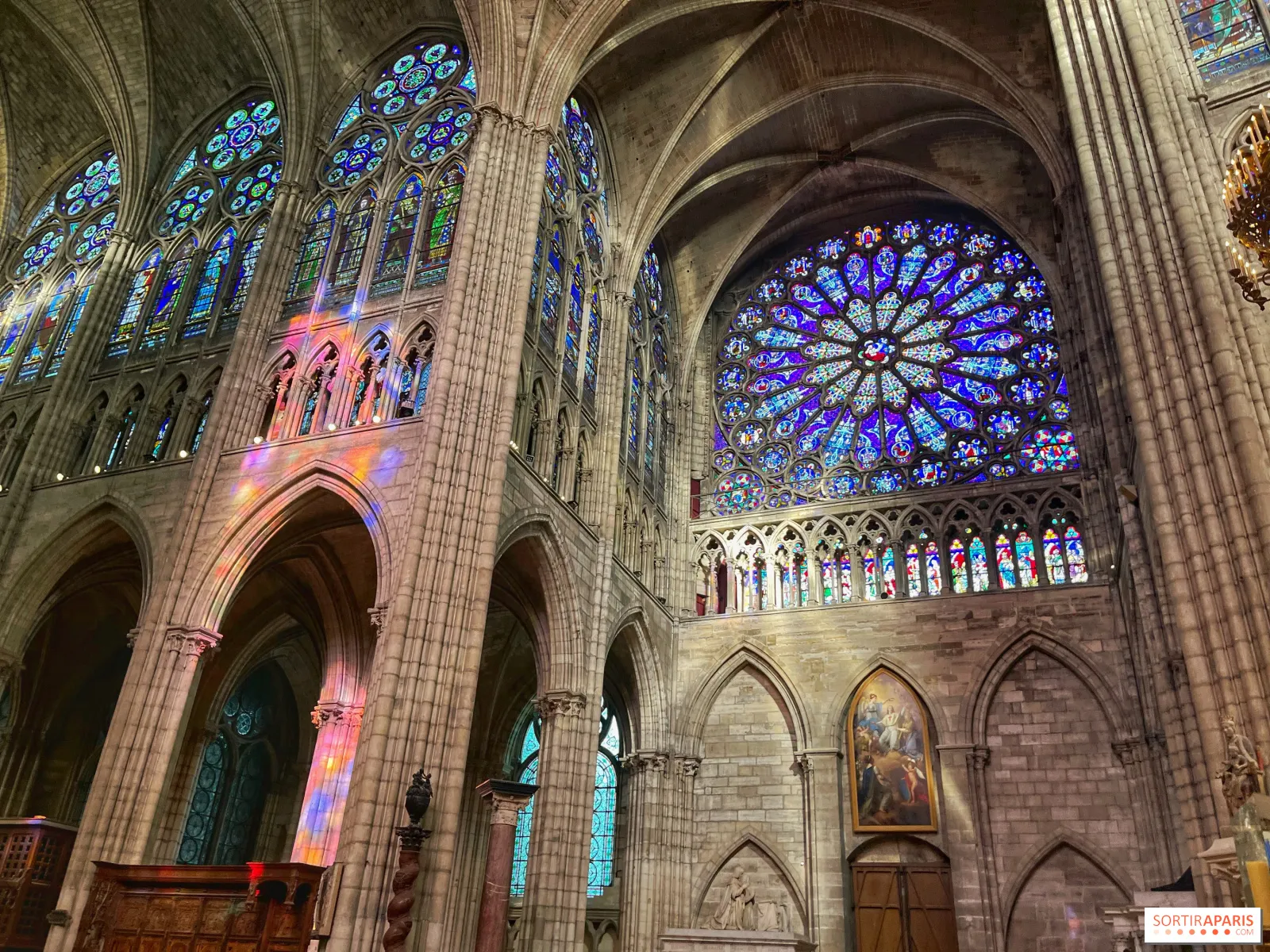
Saint‑Denis turns light into structure — a manifesto where devotion and engineering meet.
[^suger]: Suger’s texts (De Administratione and De Consecratione) outline light as the principle shaping the choir’s form and finish.
About the Author

Medieval Architecture Historian
As a Paris lover and travel writer, I created this guide to help visitors connect with Saint-Denis — from the birth of Gothic light to the intimate presence of royal memory.
Tags
Comments (0)
Loading comments...